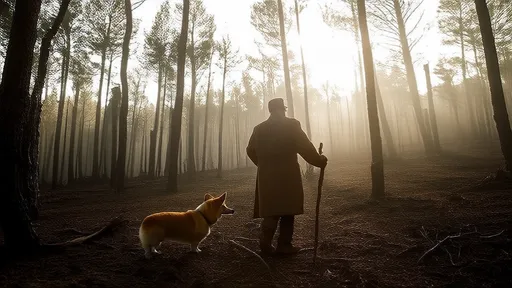
In the mist-shrouded hills of northern Italy, a man and his dog move through the predawn darkness with the quiet intensity of hunters. But they are not tracking game—they are searching for one of the world’s most elusive and expensive culinary treasures: the truffle. For centuries, these aromatic fungi have commanded astonishing prices, sometimes reaching thousands of dollars per pound. To understand why, one must venture into the forests and into the lives of those who dedicate themselves to the hunt.
The story of the truffle’s value begins with its nature. Truffles cannot be cultivated in the way that common mushrooms are; they are wild, symbiotic organisms that grow entirely underground, entwined with the roots of specific trees like oaks and hazels. This makes them incredibly difficult to find. Unlike crops that can be planted and harvested at will, truffles are fickle, their growth dependent on a precise alchemy of soil composition, weather, and tree health. A year of perfect conditions might yield a bounty, while a slight change can lead to scarcity.
This is where the truffle hunters and their canine companions enter the picture. In the past, pigs were used for the hunt due to their natural ability to sniff out truffles, drawn by a compound that mimics a boar’s sex pheromone. However, pigs are notoriously difficult to control; they love to eat the truffles they find. Today, specially trained dogs are the hunters of choice. These dogs, often mutts or breeds like Lagotto Romagnolos, are raised from puppies to associate the scent of truffles with reward and play.
I met with Giovanni, a third-generation tartufaio (truffle hunter) from Alba, a region famed for its exquisite white truffles. His dog, Bella, a scruffy and energetic mix, waited impatiently by his side. "The relationship with the dog is everything," Giovanni explained, his eyes never leaving Bella. "It is a partnership built on trust. She is not my pet; she is my colleague. I must understand her every whimper, every change in her posture. She reads the earth, and I read her."
The hunt itself is a secretive and competitive affair. Giovanni’s knowledge of the terrain is a family heirloom, passed down through generations. Certain groves, certain trees, are guarded secrets. Truffle hunters often go out in the middle of the night to protect their spots from prying eyes. "You trust no one," Giovanni said with a grim smile. "The forest gives, but it also creates thieves. There are stories of poisoned dogs and sabotaged trees. This is not a gentle hobby; it is a way of life, and for some, a war."
Once Bella signals a find with a frantic scratch at the soil, Giovanni’s work becomes delicate. He gently moves her aside and uses a small, specific tool to carefully excavate the area, ensuring the truffle is extracted without damage and that the delicate root system and mycelium network are left intact so that more may grow in the future. The truffle is then wrapped in a cloth and placed in a secure container to preserve its potent aroma.
The aroma is the entire point. The value of a truffle is not in its nutrition or size, but in its intoxicating, complex scent—a powerful blend of earth, musk, garlic, and something utterly indescribable. This aroma, however, is incredibly volatile. It begins to fade the moment the truffle is unearthed. This profound perishability is a massive driver of cost. Truffles must be found, sold, and consumed within a matter of days. This creates a frantic, high-stakes supply chain from the forest floor to the world’s most luxurious restaurants.
After the hunt, Giovanni heads to the local market or a private buyer. The pricing is never fixed. It is a tense negotiation based on the quality, size, and rarity of that day’s haul, as well as the overall market demand. A rainy season can dampen supply and send prices soaring. A strong Euro can make exports more expensive. The market is a rollercoaster. "Some weeks, you feel like a king," Giovanni admitted. "Other weeks, you wonder if it is all worth it. But then you find a perfect one, you smell it, and you remember. You are holding a piece of the forest’s soul."
The journey from Giovanni’s hands to a plate in a Michelin-starred restaurant in New York or Tokyo is a whirlwind of overnight flights and specialized couriers. The clock is always ticking. Top chefs will pay a premium for the certainty of receiving a fresh, aromatic truffle within 48 hours of its harvest. They, in turn, shave it sparingly over simple dishes like pasta or eggs, allowing its singular aroma to be the undisputed star, justifying a significant markup on the menu.
So, why is the truffle so expensive? It is the sum of these parts. It is the impossibility of farming it reliably. It is the years spent training a dog and a man to work as one. It is the generational knowledge of the land and the secret, guarded maps in a hunter’s mind. It is the danger and competition of the hunt. It is the heart-stopping urgency of its perishability. And ultimately, it is the unmatched, ephemeral sensory experience it provides—a fleeting taste of wild, ancient magic that no other ingredient on earth can replicate.
Standing in the forest with Giovanni as the sun began to rise, watching Bella sleep contentedly after her work, the high price tag finally made sense. You are not just paying for a fungus. You are paying for cold mornings, family legacy, a dog’s lifetime of training, and a race against time. You are paying for a story.
By /Aug 29, 2025
By /Aug 29, 2025
By /Aug 29, 2025

By /Aug 29, 2025
By /Aug 29, 2025
By /Aug 29, 2025

By /Aug 29, 2025
By /Aug 29, 2025
By /Aug 29, 2025
By /Aug 29, 2025
By /Aug 29, 2025
By /Aug 29, 2025
By /Aug 29, 2025
By /Aug 29, 2025
By /Aug 29, 2025
By /Aug 29, 2025
By /Aug 29, 2025
By /Aug 29, 2025
By /Aug 29, 2025
By /Aug 29, 2025
