Achieving Ultimate Smoothness in Ice Cream: How to Get Rid of Ice Crystals through Stirring and Recipe Adjustments

Aug 29, 2025 By

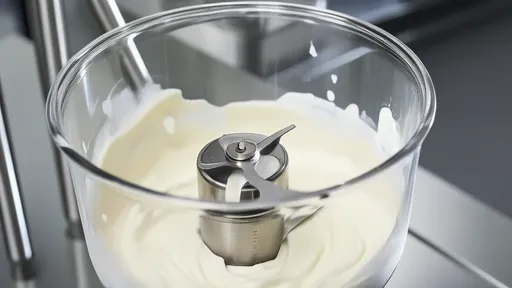
There is perhaps no greater disappointment in the frozen dessert world than scooping into a container of premium ice cream, anticipating a luxuriously smooth and creamy experience, only to be met with a gritty, icy, and crystalline texture. That unpleasant sandiness on the tongue is the work of ice crystals, the arch-nemesis of ice cream perfection. For artisanal producers and home churners alike, the quest for ultimate smoothness is a scientific and artistic pursuit, a battle fought on the fronts of recipe formulation and churning technique. Understanding the enemy—the formation and growth of these ice crystals—is the first step to victory.

The foundation of ice cream is a complex colloidal system comprised of ice crystals, air bubbles, fat globules, and a highly concentrated sugar solution. The size and quantity of the ice crystals within this matrix are the primary determinants of texture. When we perceive smoothness, what we are actually sensing is the absence of large, detectable crystals. The human tongue can detect ice crystals larger than about 50 micrometers. Below this threshold, the sensation is one of pure, unadulterated creaminess. The goal, therefore, is not to eliminate crystals entirely—an impossibility—but to create a multitude of crystals so infinitesimally small that they are imperceptible.

Ice crystal formation is a dynamic process that begins the moment the base mix hits the cold walls of the churning machine. It starts with nucleation, where water molecules organize around a tiny impurity or speck of dust, forming the seed of a crystal. During the aggressive freezing and churning process, countless these nuclei are formed. The subsequent fate of these nuclei—whether they grow into large, jagged crystals or remain small and well-dispersed—is where the art and science of ice cream making truly comes into play. The journey to a flawless texture is a race against time and physics, managed through a combination of intelligent ingredient selection and precise mechanical action.

The recipe, or formulation, of the ice cream base is the first line of defense against iciness. It is a carefully calculated balance of components each playing a specific role in controlling water and modulating crystal growth. Fat, primarily from dairy sources like cream and milk, is a crucial textural agent. Fat globules act as physical barriers within the mix, obstructing the free movement of water molecules and thus impeding their ability to join and enlarge existing ice crystals. A higher butterfat content, often between 14% and 18% in premium ice creams, provides a richer mouthfeel and contributes significantly to a smoother consistency by creating a more obstructive network for crystal growth.

Perhaps the most potent weapon in the formulator's arsenal is sugar, but its role is multifaceted and goes far beyond mere sweetness. Sugar molecules dissolve in the water portion of the mix, forming a syrup. This syrup has a lower freezing point than pure water. The higher the concentration of dissolved sugars, the lower the temperature at which the water will freeze. This means that even as the temperature in the churn drops below the freezing point of water, a significant amount of the water remains unfrozen, trapped in a super-cooled syrupy state. This liquid portion, known as the serum, surrounds the tiny ice crystals, making it more difficult for them to collide and merge. This phenomenon, known as freeze-point depression, is critical for maintaining a soft, scoopable texture straight from the freezer.

Other solids, such as milk proteins and stabilizers, play supporting but vital roles. Milk proteins help emulsify the fat and water, creating a more stable and uniform structure. Stabilizers like guar gum, locust bean gum, or xanthan gum are hydrocolloids that bind with water molecules, effectively making the water itself thicker. This increased viscosity physically hinders the mobility of water molecules, dramatically reducing the rate at which they can migrate to the surface of an existing crystal and cause it to grow. While often maligned in ingredient lists, used judiciously, stabilizers are powerful tools for promoting minuscule crystal size and preventing coarse crystallization during storage.

However, a perfect recipe is only half of the equation. Without the correct mechanical action, even the most brilliantly formulated base can succumb to a crystalline fate. This is where the churning process, specifically agitation, becomes paramount. The primary function of churning is twofold: to incorporate air (overrun) and to simultaneously freeze the mix while constantly agitating it. This constant agitation is the engine of smoothness. As the mix freezes on the chilled walls of the barrel, the dasher immediately scrapes it off, breaking up these nascent ice formations into tiny shards and distributing them evenly throughout the unfrozen base.

This process is effectively a cycle of microscopic fracturing and redistribution. Without agitation, a solid block of ice would form on the sides. With agitation, you create a vast number of small seed crystals instead of a few large ones. The continuous movement also ensures that the cold is transferred evenly throughout the entire volume, promoting uniform nucleation. The speed of the churn matters; too slow, and the scraping is inefficient, allowing crystals to grow too large before being dislodged. Too fast, and you can incorporate too much air or cause excessive butterfat clumping (which leads to a greasy mouthfeel), all while potentially not providing enough time for sufficient heat exchange. The ideal churn finds a balance that maximizes crystal disruption while optimally freezing and aerating the mix.

The final, and often overlooked, phase of crystal management occurs after the churning is complete: hardening. As the soft, freshly churned ice cream is rapidly cooled to deep-freeze temperatures, the remaining water in the unfrozen serum continues to freeze. The speed of this process is critical. A slow temperature drop provides ample time for water molecules to migrate to existing crystals, causing them to grow larger. This is known as Ostwald ripening, where large crystals grow at the expense of small ones. Rapid hardening, achieved with a powerful blast freezer that can bring the product down to its final storage temperature as quickly as possible, locks the crystal structure in place, preserving the delicate, small-crystal architecture achieved during churning.

Temperature fluctuations during storage are the silent killer of texture. Every time the freezer door is opened or the temperature cycles, a small amount of the ice cream melts. When it refreezes, it does so slowly and statically, without the benefit of agitation. This water refreezes onto the surface of existing crystals, causing them to grow progressively larger over time. This is why an ice cream that was once perfectly smooth can become icy after weeks in a home freezer. Consistent, ultra-cold storage is essential for maintaining textural integrity from the first scoop to the last.

The pursuit of the perfectly smooth scoop is a testament to the fact that great ice cream is more than the sum of its parts. It is an intricate dance between chemistry and physics, between ingredient and action. It requires a deep understanding of how milk fats coat the palate, how sugar syrups resist freezing, and how gums manage water. It demands precision in mechanical force and thermal transfer. When a master formulator and a perfectly calibrated churn work in concert, the result is a frozen dessert so sublimely smooth, so devoid of any crystalline distraction, that it transcends the category of mere treat and becomes a textural masterpiece. The magic lies not in the absence of ice, but in its masterful, imperceptible distribution.
Recommend Posts
Food

Deciphering Umami": The Discovery of the Fifth Taste and Its Representative Foods

By /Aug 29, 2025

In the quiet corners of Tokyo's Imperial University, a curious scientist named Kikunae Ikeda paused over his evening bowl of dashi. The year was 1908, and as he savored the savory broth made from kombu seaweed, Professor Ikeda found himself contemplating a flavor that defied existing classification. It wasn't sweet like sugar, sour like vinegar, salty like seawater, or bitter like medicinal herbs. This distinct sensation lingering on his palate represented something entirely different—something he would later name "umami," from the Japanese words for "delicious" and "taste."
Food

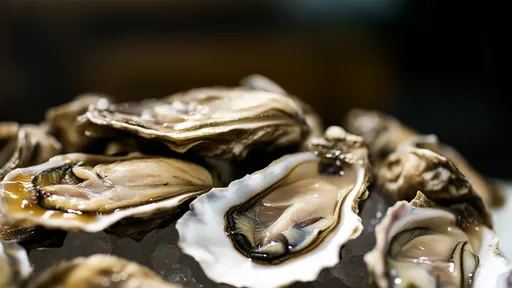
Alive Oysters: How to Determine if They're Fresh Before Serving?"

By /Aug 29, 2025

There is a particular thrill that comes with ordering oysters at a restaurant or selecting them fresh from a seafood market. That briny, oceanic taste, the cool, smooth texture—it’s an experience deeply connected to the freshness of the bivalve. The cardinal rule of oyster consumption is simple: they must be alive until the moment they are shucked and served. A dead oyster is not only unpalatable but can pose a significant health risk. Therefore, for chefs, seafood purveyors, and discerning diners alike, knowing how to discern a living, breathing oyster from one that has passed on is an essential skill, a blend of artisanal knowledge and sensory observation.
Food

Achieving Ultimate Smoothness in Ice Cream: How to Get Rid of Ice Crystals through Stirring and Recipe Adjustments

By /Aug 29, 2025

There is perhaps no greater disappointment in the frozen dessert world than scooping into a container of premium ice cream, anticipating a luxuriously smooth and creamy experience, only to be met with a gritty, icy, and crystalline texture. That unpleasant sandiness on the tongue is the work of ice crystals, the arch-nemesis of ice cream perfection. For artisanal producers and home churners alike, the quest for ultimate smoothness is a scientific and artistic pursuit, a battle fought on the fronts of recipe formulation and churning technique. Understanding the enemy—the formation and growth of these ice crystals—is the first step to victory.
Food

Scientific Analysis of Wok Qi": Maillard Reaction and Caramelization from Stir-Frying with High Heat in Chinese Cuisine

By /Aug 29, 2025

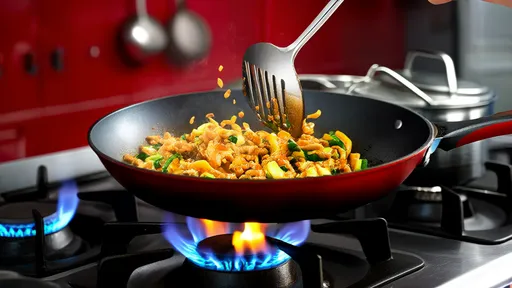
In the sizzling symphony of a Chinese kitchen, few elements are as crucial or as celebrated as wok hei. This elusive term, often translated as "the breath of the wok" or "wok aroma," is the soul of a great stir-fry. It is that complex, intoxicating flavor and aroma that defines dishes from chow mein to Kung Pao chicken, a hallmark of culinary mastery that separates the good from the unforgettable. For centuries, it was the guarded secret of chefs, an almost mystical quality attributed to skill and a well-seasoned wok. Today, however, science offers a compelling explanation, revealing that this ancient culinary magic is, in fact, a spectacular dance of chemistry and physics, primarily driven by the Maillard reaction and caramelization under intense heat.
Food

The Luxurious Price of Saffron: Why It's the World's Most Expensive Spice Sold by the Stigma

By /Aug 29, 2025

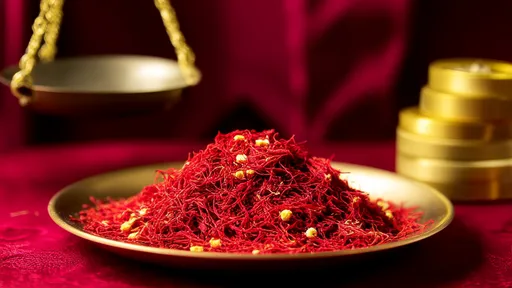
In the hushed, hallowed halls of global spice markets, among sacks of cinnamon and cardamom, exists a commodity traded with the reverence usually reserved for gemstones or precious metals. It is not sold by the pound or the kilogram, but meticulously counted by the individual filament. This is saffron, the world’s most expensive spice, a substance whose value is so intrinsically linked to its profound labor intensity and delicate nature that its price is often discussed in whispers. To understand why a few grams can command a price comparable to gold, one must journey into the sun-drenched fields where it begins, and follow the thread of its production to the market.
Food

The Disappearance and Search for Tomato Flavor: How Modern Breeding Techniques Sacrificed Taste

By /Aug 29, 2025

The story of the modern supermarket tomato is a tale of two opposing forces: the quest for perfection and the loss of soul. Walk into any grocery store in the dead of winter, and you'll find bins overflowing with perfectly round, impeccably red fruits. They are a triumph of logistics and agricultural science, able to withstand the brutal physics of cross-country shipping and endure on shelves for weeks. But pick one up, bring it home, and slice it. The experience that follows—a mealy texture, a watery juicelessness, and a profound lack of the sweet, tangy explosion one expects—is the quiet failure hidden within that success. The flavor has been left behind, a casualty in a decades-long war for yield, uniformity, and durability.
Food

Caramelization of Sugar: Temperature Control Points from Clear Syrup to Dark Caramel

By /Aug 29, 2025

The transformation of sugar from a clear syrup to a rich, dark caramel is one of the most fascinating processes in the culinary world. It is a journey governed by precise temperature control, where each degree shift brings about a distinct change in color, flavor, and texture. This alchemical process, known as caramelization, is not merely a chemical reaction but an art form that has been perfected by confectioners and chefs over centuries. Understanding the temperature milestones is essential for anyone looking to master the creation of everything from delicate sugar work to deeply flavorful sauces and candies.
Food

Why Spiciness Isn't a Taste: Understanding the Painful Experience Brought by Capsaicin

By /Aug 29, 2025

When we talk about the experience of eating spicy food, we often describe it as a taste, but scientifically speaking, that burning sensation on your tongue isn’t a taste at all. In fact, what we perceive as "spiciness" is actually a form of pain—a clever evolutionary trick played by certain plants, and mediated by a compound called capsaicin.
Food

Why Are Truffles So Expensive? An In-Depth Visit with Italian Truffle Hunters and Their Dogs

By /Aug 29, 2025

In the mist-shrouded hills of northern Italy, a man and his dog move through the predawn darkness with the quiet intensity of hunters. But they are not tracking game—they are searching for one of the world’s most elusive and expensive culinary treasures: the truffle. For centuries, these aromatic fungi have commanded astonishing prices, sometimes reaching thousands of dollars per pound. To understand why, one must venture into the forests and into the lives of those who dedicate themselves to the hunt.
Food

The Cloning" Crisis of Bananas: How is the Huajiao Variety Facing the Risk of Extinction?

By /Aug 29, 2025

In the lush plantations of Central and South America, a silent crisis is unfolding that threatens the world's most popular fruit. The Cavendish banana, the yellow variety that dominates global supermarket shelves, faces an existential threat from a rapidly spreading fungal disease. This isn't the first time the banana industry has confronted such a disaster—the very reason Cavendish became dominant was because its predecessor, the Gros Michel variety, was virtually wiped out by a similar pathogen in the 1950s. History appears to be repeating itself, raising urgent questions about agricultural monoculture and food security.
Food

Why Madagascar's Weather Can Affect Global Ice Cream Prices in the Vanilla Pod Futures Market?

By /Aug 29, 2025

The global supply chain for vanilla is a delicate and intricate web, and at its heart lies the island nation of Madagascar. This single region is responsible for supplying over 80% of the world's high-quality, natural vanilla, a key flavoring agent in countless products, from perfumes to the ubiquitous pint of ice cream. The journey from a fragrant orchid flower to the complex, flavorful bean is a long and perilous one, heavily dependent on the whims of nature. Consequently, a storm in Madagascar doesn't just mean local rainfall; it sends ripples through financial markets and ultimately dictates the price consumers pay for a scoop of their favorite dessert thousands of miles away.
Food

A Brief History of the Cod Wars: Real International Conflicts Over Fish

By /Aug 29, 2025

The Cod Wars stand as one of the most peculiar and persistent international disputes of the twentieth century, a series of confrontations that pitted two traditional allies against each other in a battle over fishing rights in the North Atlantic. For over two decades, the United Kingdom and Iceland engaged in a tense and often absurd struggle, where the primary weapon was not the missile or the rifle, but the fishing net and the maritime patrol vessel. It was a conflict born not from ideology or territorial ambition in the traditional sense, but from a fundamental need to protect an economic lifeline. The story of the Cod Wars is a testament to how a seemingly minor resource can escalate into a matter of national sovereignty and pride, drawing in navies, threatening NATO cohesion, and reshaping international maritime law.
Food

The Precision of Sous Vide Cooking: Why 63.5°C and Not 63°C?

By /Aug 29, 2025

In the world of sous vide cooking, precision is not just a preference—it's the very foundation of the technique. While many home cooks might view temperature settings as flexible guidelines, professional chefs and food scientists understand that a difference of even half a degree Celsius can dramatically alter the final product. This brings us to a question that often puzzles enthusiasts: why would a recipe specify 63.5°C instead of a round number like 63°C? The answer lies at the fascinating intersection of food science, protein chemistry, and culinary artistry.
Food

Emulsification Failure Rescue Guide: How to Restore Smoothness to Separated Sauces?

By /Aug 29, 2025

There's that heart-sinking moment every cook knows too well: you're whisking away at a sauce, watching it come together into a beautiful, glossy emulsion, when suddenly—it breaks. The silky smoothness gives way to a grainy, oily mess that seems beyond repair. Before you even think about pouring it down the drain, take a deep breath. A broken sauce is not a lost cause. In fact, with a few simple techniques and an understanding of why emulsions fail, you can almost always bring it back from the brink.
Food

Are Coffee Beans Beans? A Botanical Reevaluation of Coffee Fruits.

By /Aug 29, 2025

When we casually refer to coffee beans, we are invoking a culinary and cultural shorthand that belies a fascinating botanical reality. The journey of your morning brew begins not with a bean, but with a fruit—a complex and vibrant drupe that grows on the Coffea plant. To truly appreciate the depth in your cup, one must first understand the journey from a flowering shrub to the roasted seeds we grind.
Food

The Mystery of Pepper Colors: Do Black, White, Green, and Red Peppers Come from the Same Plant?

By /Aug 29, 2025

In the world of spices, few are as universally recognized yet widely misunderstood as pepper. The tiny, wrinkled spheres that fill our shakers and spice racks come in a variety of colors—black, white, green, and red—each with its own distinct flavor, aroma, and culinary application. What may come as a surprise to many is that all these varieties originate from the very same plant: Piper nigrum, a flowering vine native to the Malabar Coast of India. This remarkable plant produces berries that, depending on their stage of harvest and method of processing, transform into the different peppers we know and love.
Food

Molecular Gastronomy for Beginners: Creating Fruit Caviar with Calcium Chloride and Sodium Alginate at Home

By /Aug 29, 2025

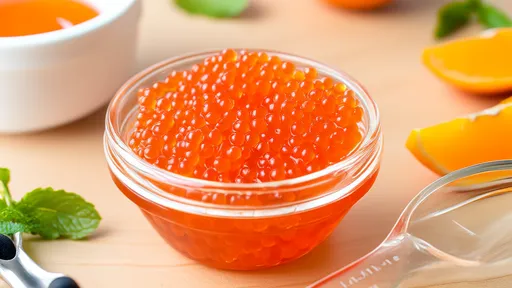
There is a certain magic in watching a liquid transform into delicate, jewel-like spheres that burst with flavor upon the slightest pressure. This is the captivating allure of spherification, a cornerstone technique of molecular gastronomy that once belonged exclusively to the domain of high-end restaurant kitchens. Today, armed with little more than some specialized powders and a bit of culinary curiosity, you can recreate this modernist wizardry right on your own countertop, turning vibrant fruit purees into dazzling, caviar-like pearls.
Food

The Microscopic Battle in Your Pickle Jar

By /Aug 29, 2025

In the quiet corners of your kitchen, a silent, microscopic war is being waged. Your humble kimchi jar, crock of sauerkraut, or tub of fermented pickles is not merely a vessel for preserving vegetables—it is a dynamic, living ecosystem. Within its briny depths, trillions of microorganisms battle for dominance, engage in complex chemical warfare, and ultimately determine the fate of your ferment. This is not a peaceful coexistence; it is a fierce microbial conflict where only the strongest survive, and the spoils of war are the tangy, complex flavors we’ve come to love.
Food

The Working Principle of Yeast: How Single-Cell Fungi Become MVPs in the Baking Industry

By /Aug 29, 2025

In the warm, dimly lit kitchens of home bakers and the massive industrial facilities supplying global markets, a silent MVP works its magic. This microscopic powerhouse, a single-celled fungus known as yeast, is the undisputed champion of the baking world. Its story is one of biological elegance, a quiet fermentation process that humans have harnessed for millennia to transform simple mixtures of flour and water into the airy, complex, and utterly irresistible staples we call bread.
Food

The Magical Physics of Pressure Cookers: How Increasing Air Pressure Raises the Boiling Point of Water

By /Aug 29, 2025

In the heart of every kitchen, where steam hisses and aromas mingle, lies a humble yet profound piece of engineering: the pressure cooker. To the uninitiated, it might seem like just another pot with a tightly sealed lid, but to those who understand the physics at play, it is a vessel of transformation, where the very laws of nature are harnessed to achieve culinary perfection. At the core of this magic is a simple but powerful principle: by increasing pressure, we can raise the boiling point of water, and in doing so, unlock flavors, textures, and efficiencies that are otherwise impossible. This is not mere kitchen trickery; it is science in action, a dance of molecules and forces that has revolutionized cooking across cultures and centuries.