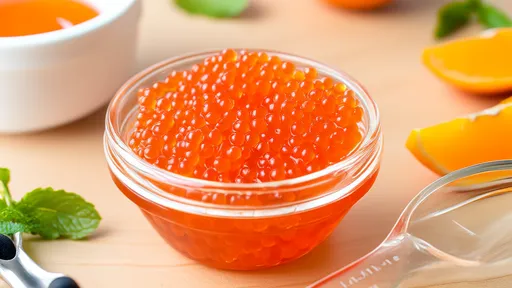
There is a certain magic in watching a liquid transform into delicate, jewel-like spheres that burst with flavor upon the slightest pressure. This is the captivating allure of spherification, a cornerstone technique of molecular gastronomy that once belonged exclusively to the domain of high-end restaurant kitchens. Today, armed with little more than some specialized powders and a bit of culinary curiosity, you can recreate this modernist wizardry right on your own countertop, turning vibrant fruit purees into dazzling, caviar-like pearls.
The science behind this edible alchemy is as elegant as the results. At its heart are two key ingredients: sodium alginate and calcium chloride. Sodium alginate, a natural polysaccharide extracted from brown seaweed, possesses a remarkable property. When dissolved in a liquid, it acts as a thickener. But its true magic is revealed when this alginate-rich solution meets a calcium bath. The calcium ions rapidly cross-link with the alginate molecules, forming a thin, flexible, and incredibly delicate gel membrane on the surface of the droplet. This membrane is strong enough to hold the liquid center intact, yet so thin that it disappears the moment it touches your tongue, creating that sensational burst of pure flavor. It is a perfect, delicious paradox of structure and ephemerality.
Before you begin your foray into spherification, gathering your toolkit is the first step. The ingredients are surprisingly simple. You will need sodium alginate, the gelling agent that forms the membrane. This is a fine, off-white powder that can be sourced from online specialty retailers or stores dedicated to molecular gastronomy supplies. Next is calcium chloride, the source of the crucial calcium ions. Food-grade calcium chloride is often sold as a pickling additive or a cheese-making salt. For your flavorful base, choose a high-acid fruit puree like raspberry, mango, passion fruit, or lemon. The natural acidity helps the process and provides a brilliant, tangy payload for your spheres. You will also need clean, filtered water, as the minerals in tap water can interfere with the alginate's dissolving and gelling capabilities.
Beyond the powders, a few simple tools will make the process infinitely easier. A blender is non-negotiable for creating a perfectly smooth alginate mixture free of lumps that could clog your dropper. For forming the spheres themselves, you have several options. The most accessible tool is a simple plastic squeeze bottle with a small opening, which allows you to control the size of the droplets. For more precision and smaller, true caviar-sized pearls, a caviar maker or dropper pipette is an excellent investment. Finally, you will need a slotted spoon or a small fine-mesh strainer for gently retrieving the finished spheres from their calcium bath.
The journey from fruit to faux caviar begins with the creation of your alginate base. Take your chosen fruit puree and ensure it is completely smooth. If it contains seeds or fibers, pass it through a fine-mesh sieve. In a powerful blender, combine the puree with a precise amount of sodium alginate. The key here is to blend on high speed for a full minute or two. This is not just about mixing; it is about fully hydrating the alginate powder and ensuring it is completely dissolved into the liquid. You will notice the puree thicken slightly. Once blended, this mixture must rest for at least a few hours, or ideally overnight, in the refrigerator. This resting period is critical as it allows any air bubbles incorporated during blending to rise to the surface and pop, resulting in clearer spheres and preventing the alginate from clumping during the next stage.
While your base rests, prepare your setting bath. Dissolve your calcium chloride in a large bowl of filtered water. The water should be deep enough to allow the droplets to fall a few inches, giving them enough time to form a complete membrane before settling at the bottom. A good ratio is about 2 grams of calcium chloride per 500 ml of water, but always refer to your specific product's instructions. Stir until the crystals are fully dissolved.
Now for the moment of transformation. Bring your alginate base and your calcium bath to your workstation. Gently skim off any bubbles from the top of your base. Fill your squeeze bottle or pipette with the fruit-alginate mixture. Holding the tool a few inches above the surface of the calcium bath, slowly and steadily squeeze out droplets, allowing them to fall gently into the water. Watch as they sink, each one instantly forming a tiny, self-contained sphere. The size of your pearls will be determined by the size of your dropper opening and the pressure you apply. Let them sit in the bath for about sixty to ninety seconds. This is the gelling time, where the calcium ions diffuse into the droplet, creating the gel membrane. Agitate the water very gently with your spoon to ensure they don't stick together.
Once the gelling time is complete, it is time to retrieve your creations. Using a slotted spoon or a fine mesh strainer, carefully lift the spheres from the calcium bath. To stop the gelling process immediately and prevent the membranes from becoming too thick and rubbery, you must give them a quick rinse in a separate bowl of clean filtered water. This wash step is crucial for achieving that signature delicate, burst-in-your-mouth texture. Your fruit caviar is now ready to be used.
Even with a careful hand, you may encounter a few hurdles. If your spheres have unsightly "tails," it is often because the droplet was dropped from too high up or the alginate mixture was not thick enough. Getting closer to the bath's surface or adding a touch more alginate to your base can solve this. If the spheres are becoming too firm and chewy, they are spending too much time in the calcium bath. Reduce your gelling time by twenty seconds and test again. Conversely, if they are not holding their shape and are breaking apart, they need more time to gel. The most common issue is the spheres sticking together, which is usually remedied by ensuring gentle agitation in the bath and not overcrowding the container.
Your homemade fruit caviar is a versatile and stunning garnish. Scatter a spoonful over a scoop of vanilla ice cream or panna cotta for a dramatic textural and flavor contrast. Elevate a simple cheesecake or a pavlova with a cascade of vibrant pearls. They can transform a classic cocktail into a modernist masterpiece; imagine a champagne flute with raspberry spheres sinking slowly to the bottom. For a savory twist, try the technique with tomato water or concentrated herb infusions to garnish soups and salads. The possibilities are limited only by your imagination and the flavors you can puree.
Mastering basic spherification opens the door to more advanced variations. Reverse spherification is a technique designed for ingredients rich in calcium or that are high in alcohol or acid, which inhibit the standard method. Here, the flavorful liquid is mixed with calcium lactate gluconate and dropped into a sodium alginate bath, flipping the process on its head. For larger, more dramatic spheres often called "ravioli" or "eggs," you can use the spooning method, carefully submerging a larger amount of the base into the setting bath to create a single, large sphere with a thick liquid center.
The true beauty of this technique lies not in complex machinery, but in understanding a simple chemical dance between two powders. It demystifies a part of the culinary vanguard, bringing a touch of magic and undeniable wow-factor to the home kitchen. It is a reminder that with a little science and a lot of passion, the line between home cook and culinary artist is beautifully thin. So, source your powders, puree your favorite fruit, and prepare to dazzle your senses. The world of molecular gastronomy is waiting for you to take the first drop.
By /Aug 29, 2025
By /Aug 29, 2025
By /Aug 29, 2025

By /Aug 29, 2025
By /Aug 29, 2025
By /Aug 29, 2025
By /Aug 29, 2025
By /Aug 29, 2025

By /Aug 29, 2025

By /Aug 29, 2025

By /Aug 29, 2025

By /Aug 29, 2025
By /Aug 29, 2025
By /Aug 29, 2025
By /Aug 29, 2025
By /Aug 29, 2025
By /Aug 29, 2025
By /Aug 29, 2025
By /Aug 29, 2025
By /Aug 29, 2025
