A Brief History of the Cod Wars: Real International Conflicts Over Fish

Aug 29, 2025 By

The Cod Wars stand as one of the most peculiar and persistent international disputes of the twentieth century, a series of confrontations that pitted two traditional allies against each other in a battle over fishing rights in the North Atlantic. For over two decades, the United Kingdom and Iceland engaged in a tense and often absurd struggle, where the primary weapon was not the missile or the rifle, but the fishing net and the maritime patrol vessel. It was a conflict born not from ideology or territorial ambition in the traditional sense, but from a fundamental need to protect an economic lifeline. The story of the Cod Wars is a testament to how a seemingly minor resource can escalate into a matter of national sovereignty and pride, drawing in navies, threatening NATO cohesion, and reshaping international maritime law.

To understand the ferocity of the dispute, one must first appreciate the centrality of cod to Iceland. For centuries, the fish was the cornerstone of the nation's economy and diet. Its export revenues funded the country's development and modernization. By the mid-20th century, as global fishing technology advanced with factory trawlers and sonar, concerns grew in Reykjavik that foreign fleets, particularly the vast British trawler fleet, were overfishing the stocks upon which Icelandic livelihoods depended. The Icelandic government concluded that its survival as a nation was intrinsically linked to the survival of the cod stocks in its surrounding waters. This was not merely an economic calculation; it was an existential one.

The conflict unfolded in three distinct phases, each triggered by Iceland's unilateral extension of its exclusive fishing limits. The First Cod War erupted in 1958 when Iceland declared a 12-nautical-mile exclusive fisheries zone. The UK refused to recognize the extension, and the Royal Navy was dispatched to protect British trawlers operating inside the new limit. What followed was a bizarre game of maritime chicken. Icelandic Coast Guard vessels, small and nimble, would attempt to cut the warps (the cables towing the trawls) of British ships. Royal Navy frigates would then manoeuvre to shield the trawlers, leading to tense standoffs and occasional ramming incidents. No shots were fired, but the sea became a stage for calculated aggression and naval brinkmanship.

A decade later, the Second Cod War began in 1972 with Iceland's audacious expansion to a 50-nautical-mile limit. This move was met with even greater resistance from London. The British government again deployed a protective fleet, this time larger and more determined. The confrontations grew more intense and dangerous. The Icelandic Coast Guard, now equipped with specially designed warp-cutters, became more adept at their task. The most famous tool of this conflict was the Ægir, an Icelandic gunboat that earned a formidable reputation for its aggressive tactics. Ramminɡ became a standard tactic, with ships on both sides sustaining significant damage. The situation escalated from a fisheries dispute to a genuine international crisis, straining the diplomatic bonds between the two NATO allies to a breaking point.

The final and most severe chapter, the Third Cod War, commenced in 1975 with Iceland's most ambitious declaration: a 200-nautical-mile Exclusive Economic Zone (EEZ). This was a direct challenge to the entire international order of the seas. The UK, supported by West Germany, categorically rejected the move. The Royal Navy assembled its largest protection fleet yet, including frigates, supply vessels, and tugs, to safeguard a fleet of about forty British trawlers. The Icelanders, though massively outgunned, refused to back down. Their strategy was one of asymmetric warfare on the high seas. Coast Guard ships, like the Þór, repeatedly rammed British warships many times their size, creating iconic images of the conflict. Beyond the physical clashes, Iceland wielded a powerful diplomatic weapon: it threatened to withdraw from NATO and expel the critical US military base at Keflavík, a cornerstone of Western defence against Soviet submarines during the Cold War.

This ultimatum changed everything. The United States, fearing a catastrophic gap in the GIUK Gap (Greenland-Iceland-UK Gap) defence line, applied immense pressure on the British government to concede. With NATO unity at stake and no clear end in sight to the costly naval deployments, the UK was forced to the negotiating table. In 1976, a humiliated Britain agreed to a settlement. It recognized Iceland's 200-mile zone in exchange for a temporary allowance for a limited number of British trawlers to fish within it, an allowance that was phased out within two years. Iceland had won a total victory.

The ramifications of the Cod Wars extended far beyond the cold waters of the North Atlantic. Iceland's success served as a catalyst for a global movement. Developing nations with rich coastal resources saw Iceland's defiance as a blueprint for reclaiming control from distant-water fishing powers. This momentum was crucial in the United Nations Conference on the Law of the Sea (UNCLOS), which eventually formalized the 200-nautical-mile EEZ as a standard principle of international law in 1982. In a profound twist, the stubborn fight of a tiny island nation had rewritten the rules of the ocean for the entire world, granting coastal states unprecedented authority over their maritime resources.

Today, the Cod Wars are remembered as a classic example of how a small nation can leverage strategic importance and sheer determination to overcome a much larger adversary. For Iceland, the conflict cemented its identity as a fiercely independent state willing to defend its interests at all costs. The victory ensured its economic sovereignty for generations. For Britain, it was a frustrating and embarrassing episode that demonstrated the limits of naval power in a modern geopolitical context. The legacy of the Cod Wars is etched not only in the hulls of the ships that were rammed but in the very law of the sea, a lasting reminder that sometimes, the most consequential battles are fought not for gold or glory, but for fish.
Recommend Posts
Food

Deciphering Umami": The Discovery of the Fifth Taste and Its Representative Foods

By /Aug 29, 2025

In the quiet corners of Tokyo's Imperial University, a curious scientist named Kikunae Ikeda paused over his evening bowl of dashi. The year was 1908, and as he savored the savory broth made from kombu seaweed, Professor Ikeda found himself contemplating a flavor that defied existing classification. It wasn't sweet like sugar, sour like vinegar, salty like seawater, or bitter like medicinal herbs. This distinct sensation lingering on his palate represented something entirely different—something he would later name "umami," from the Japanese words for "delicious" and "taste."
Food

Alive Oysters: How to Determine if They're Fresh Before Serving?"

By /Aug 29, 2025

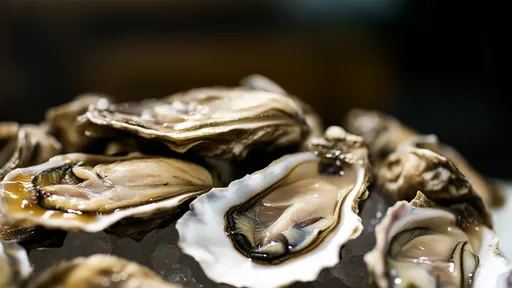
There is a particular thrill that comes with ordering oysters at a restaurant or selecting them fresh from a seafood market. That briny, oceanic taste, the cool, smooth texture—it’s an experience deeply connected to the freshness of the bivalve. The cardinal rule of oyster consumption is simple: they must be alive until the moment they are shucked and served. A dead oyster is not only unpalatable but can pose a significant health risk. Therefore, for chefs, seafood purveyors, and discerning diners alike, knowing how to discern a living, breathing oyster from one that has passed on is an essential skill, a blend of artisanal knowledge and sensory observation.
Food

Achieving Ultimate Smoothness in Ice Cream: How to Get Rid of Ice Crystals through Stirring and Recipe Adjustments

By /Aug 29, 2025

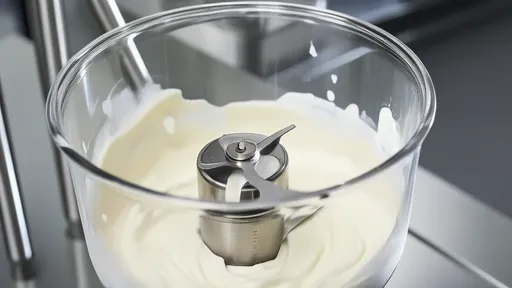
There is perhaps no greater disappointment in the frozen dessert world than scooping into a container of premium ice cream, anticipating a luxuriously smooth and creamy experience, only to be met with a gritty, icy, and crystalline texture. That unpleasant sandiness on the tongue is the work of ice crystals, the arch-nemesis of ice cream perfection. For artisanal producers and home churners alike, the quest for ultimate smoothness is a scientific and artistic pursuit, a battle fought on the fronts of recipe formulation and churning technique. Understanding the enemy—the formation and growth of these ice crystals—is the first step to victory.
Food

Scientific Analysis of Wok Qi": Maillard Reaction and Caramelization from Stir-Frying with High Heat in Chinese Cuisine

By /Aug 29, 2025

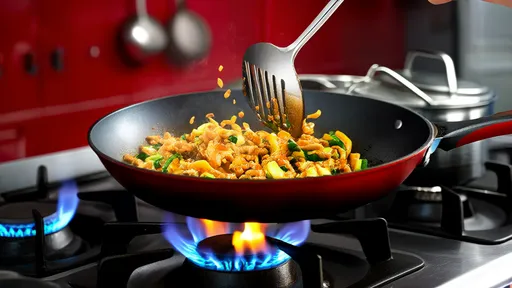
In the sizzling symphony of a Chinese kitchen, few elements are as crucial or as celebrated as wok hei. This elusive term, often translated as "the breath of the wok" or "wok aroma," is the soul of a great stir-fry. It is that complex, intoxicating flavor and aroma that defines dishes from chow mein to Kung Pao chicken, a hallmark of culinary mastery that separates the good from the unforgettable. For centuries, it was the guarded secret of chefs, an almost mystical quality attributed to skill and a well-seasoned wok. Today, however, science offers a compelling explanation, revealing that this ancient culinary magic is, in fact, a spectacular dance of chemistry and physics, primarily driven by the Maillard reaction and caramelization under intense heat.
Food

The Luxurious Price of Saffron: Why It's the World's Most Expensive Spice Sold by the Stigma

By /Aug 29, 2025

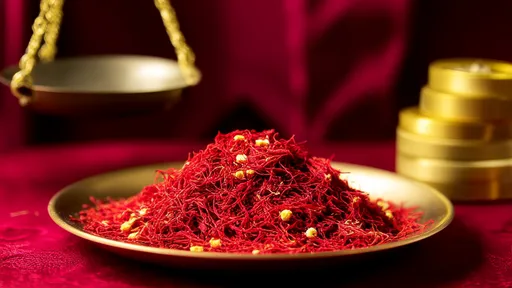
In the hushed, hallowed halls of global spice markets, among sacks of cinnamon and cardamom, exists a commodity traded with the reverence usually reserved for gemstones or precious metals. It is not sold by the pound or the kilogram, but meticulously counted by the individual filament. This is saffron, the world’s most expensive spice, a substance whose value is so intrinsically linked to its profound labor intensity and delicate nature that its price is often discussed in whispers. To understand why a few grams can command a price comparable to gold, one must journey into the sun-drenched fields where it begins, and follow the thread of its production to the market.
Food

The Disappearance and Search for Tomato Flavor: How Modern Breeding Techniques Sacrificed Taste

By /Aug 29, 2025

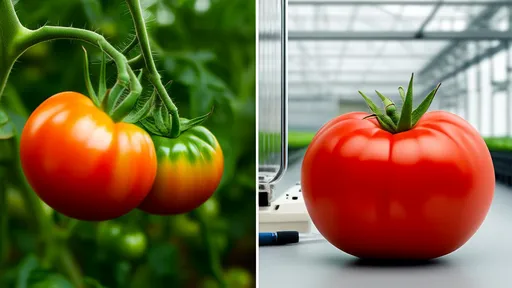
The story of the modern supermarket tomato is a tale of two opposing forces: the quest for perfection and the loss of soul. Walk into any grocery store in the dead of winter, and you'll find bins overflowing with perfectly round, impeccably red fruits. They are a triumph of logistics and agricultural science, able to withstand the brutal physics of cross-country shipping and endure on shelves for weeks. But pick one up, bring it home, and slice it. The experience that follows—a mealy texture, a watery juicelessness, and a profound lack of the sweet, tangy explosion one expects—is the quiet failure hidden within that success. The flavor has been left behind, a casualty in a decades-long war for yield, uniformity, and durability.
Food

Caramelization of Sugar: Temperature Control Points from Clear Syrup to Dark Caramel

By /Aug 29, 2025

The transformation of sugar from a clear syrup to a rich, dark caramel is one of the most fascinating processes in the culinary world. It is a journey governed by precise temperature control, where each degree shift brings about a distinct change in color, flavor, and texture. This alchemical process, known as caramelization, is not merely a chemical reaction but an art form that has been perfected by confectioners and chefs over centuries. Understanding the temperature milestones is essential for anyone looking to master the creation of everything from delicate sugar work to deeply flavorful sauces and candies.
Food

Why Spiciness Isn't a Taste: Understanding the Painful Experience Brought by Capsaicin

By /Aug 29, 2025

When we talk about the experience of eating spicy food, we often describe it as a taste, but scientifically speaking, that burning sensation on your tongue isn’t a taste at all. In fact, what we perceive as "spiciness" is actually a form of pain—a clever evolutionary trick played by certain plants, and mediated by a compound called capsaicin.
Food

Why Are Truffles So Expensive? An In-Depth Visit with Italian Truffle Hunters and Their Dogs

By /Aug 29, 2025

In the mist-shrouded hills of northern Italy, a man and his dog move through the predawn darkness with the quiet intensity of hunters. But they are not tracking game—they are searching for one of the world’s most elusive and expensive culinary treasures: the truffle. For centuries, these aromatic fungi have commanded astonishing prices, sometimes reaching thousands of dollars per pound. To understand why, one must venture into the forests and into the lives of those who dedicate themselves to the hunt.
Food

The Cloning" Crisis of Bananas: How is the Huajiao Variety Facing the Risk of Extinction?

By /Aug 29, 2025

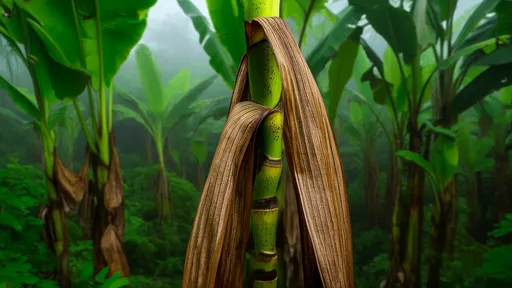
In the lush plantations of Central and South America, a silent crisis is unfolding that threatens the world's most popular fruit. The Cavendish banana, the yellow variety that dominates global supermarket shelves, faces an existential threat from a rapidly spreading fungal disease. This isn't the first time the banana industry has confronted such a disaster—the very reason Cavendish became dominant was because its predecessor, the Gros Michel variety, was virtually wiped out by a similar pathogen in the 1950s. History appears to be repeating itself, raising urgent questions about agricultural monoculture and food security.
Food

Why Madagascar's Weather Can Affect Global Ice Cream Prices in the Vanilla Pod Futures Market?

By /Aug 29, 2025

The global supply chain for vanilla is a delicate and intricate web, and at its heart lies the island nation of Madagascar. This single region is responsible for supplying over 80% of the world's high-quality, natural vanilla, a key flavoring agent in countless products, from perfumes to the ubiquitous pint of ice cream. The journey from a fragrant orchid flower to the complex, flavorful bean is a long and perilous one, heavily dependent on the whims of nature. Consequently, a storm in Madagascar doesn't just mean local rainfall; it sends ripples through financial markets and ultimately dictates the price consumers pay for a scoop of their favorite dessert thousands of miles away.
Food

A Brief History of the Cod Wars: Real International Conflicts Over Fish

By /Aug 29, 2025

The Cod Wars stand as one of the most peculiar and persistent international disputes of the twentieth century, a series of confrontations that pitted two traditional allies against each other in a battle over fishing rights in the North Atlantic. For over two decades, the United Kingdom and Iceland engaged in a tense and often absurd struggle, where the primary weapon was not the missile or the rifle, but the fishing net and the maritime patrol vessel. It was a conflict born not from ideology or territorial ambition in the traditional sense, but from a fundamental need to protect an economic lifeline. The story of the Cod Wars is a testament to how a seemingly minor resource can escalate into a matter of national sovereignty and pride, drawing in navies, threatening NATO cohesion, and reshaping international maritime law.
Food

The Precision of Sous Vide Cooking: Why 63.5°C and Not 63°C?

By /Aug 29, 2025

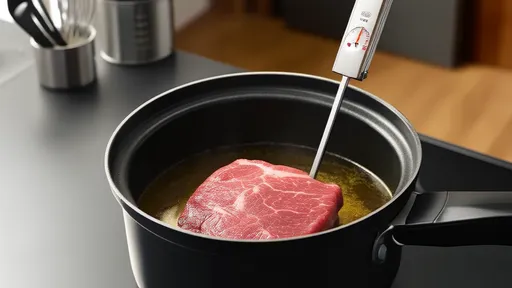
In the world of sous vide cooking, precision is not just a preference—it's the very foundation of the technique. While many home cooks might view temperature settings as flexible guidelines, professional chefs and food scientists understand that a difference of even half a degree Celsius can dramatically alter the final product. This brings us to a question that often puzzles enthusiasts: why would a recipe specify 63.5°C instead of a round number like 63°C? The answer lies at the fascinating intersection of food science, protein chemistry, and culinary artistry.
Food

Emulsification Failure Rescue Guide: How to Restore Smoothness to Separated Sauces?

By /Aug 29, 2025

There's that heart-sinking moment every cook knows too well: you're whisking away at a sauce, watching it come together into a beautiful, glossy emulsion, when suddenly—it breaks. The silky smoothness gives way to a grainy, oily mess that seems beyond repair. Before you even think about pouring it down the drain, take a deep breath. A broken sauce is not a lost cause. In fact, with a few simple techniques and an understanding of why emulsions fail, you can almost always bring it back from the brink.
Food

Are Coffee Beans Beans? A Botanical Reevaluation of Coffee Fruits.

By /Aug 29, 2025

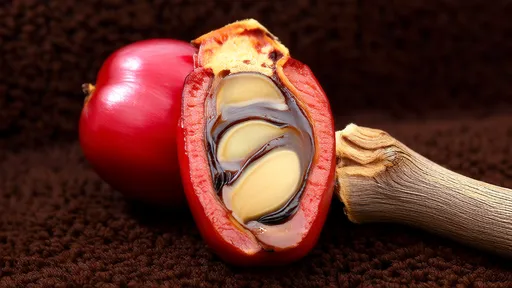
When we casually refer to coffee beans, we are invoking a culinary and cultural shorthand that belies a fascinating botanical reality. The journey of your morning brew begins not with a bean, but with a fruit—a complex and vibrant drupe that grows on the Coffea plant. To truly appreciate the depth in your cup, one must first understand the journey from a flowering shrub to the roasted seeds we grind.
Food

The Mystery of Pepper Colors: Do Black, White, Green, and Red Peppers Come from the Same Plant?

By /Aug 29, 2025

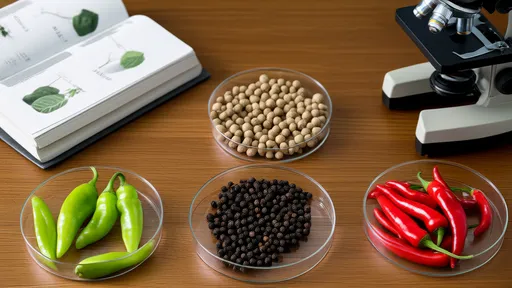
In the world of spices, few are as universally recognized yet widely misunderstood as pepper. The tiny, wrinkled spheres that fill our shakers and spice racks come in a variety of colors—black, white, green, and red—each with its own distinct flavor, aroma, and culinary application. What may come as a surprise to many is that all these varieties originate from the very same plant: Piper nigrum, a flowering vine native to the Malabar Coast of India. This remarkable plant produces berries that, depending on their stage of harvest and method of processing, transform into the different peppers we know and love.
Food

Molecular Gastronomy for Beginners: Creating Fruit Caviar with Calcium Chloride and Sodium Alginate at Home

By /Aug 29, 2025

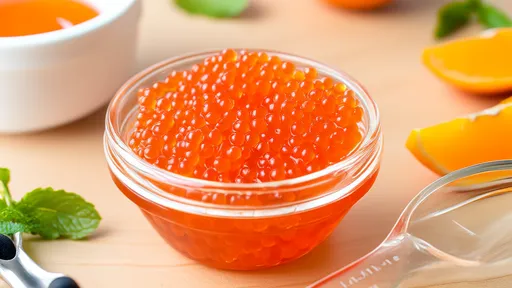
There is a certain magic in watching a liquid transform into delicate, jewel-like spheres that burst with flavor upon the slightest pressure. This is the captivating allure of spherification, a cornerstone technique of molecular gastronomy that once belonged exclusively to the domain of high-end restaurant kitchens. Today, armed with little more than some specialized powders and a bit of culinary curiosity, you can recreate this modernist wizardry right on your own countertop, turning vibrant fruit purees into dazzling, caviar-like pearls.
Food

The Microscopic Battle in Your Pickle Jar

By /Aug 29, 2025

In the quiet corners of your kitchen, a silent, microscopic war is being waged. Your humble kimchi jar, crock of sauerkraut, or tub of fermented pickles is not merely a vessel for preserving vegetables—it is a dynamic, living ecosystem. Within its briny depths, trillions of microorganisms battle for dominance, engage in complex chemical warfare, and ultimately determine the fate of your ferment. This is not a peaceful coexistence; it is a fierce microbial conflict where only the strongest survive, and the spoils of war are the tangy, complex flavors we’ve come to love.
Food

The Working Principle of Yeast: How Single-Cell Fungi Become MVPs in the Baking Industry

By /Aug 29, 2025

In the warm, dimly lit kitchens of home bakers and the massive industrial facilities supplying global markets, a silent MVP works its magic. This microscopic powerhouse, a single-celled fungus known as yeast, is the undisputed champion of the baking world. Its story is one of biological elegance, a quiet fermentation process that humans have harnessed for millennia to transform simple mixtures of flour and water into the airy, complex, and utterly irresistible staples we call bread.
Food

The Magical Physics of Pressure Cookers: How Increasing Air Pressure Raises the Boiling Point of Water

By /Aug 29, 2025

In the heart of every kitchen, where steam hisses and aromas mingle, lies a humble yet profound piece of engineering: the pressure cooker. To the uninitiated, it might seem like just another pot with a tightly sealed lid, but to those who understand the physics at play, it is a vessel of transformation, where the very laws of nature are harnessed to achieve culinary perfection. At the core of this magic is a simple but powerful principle: by increasing pressure, we can raise the boiling point of water, and in doing so, unlock flavors, textures, and efficiencies that are otherwise impossible. This is not mere kitchen trickery; it is science in action, a dance of molecules and forces that has revolutionized cooking across cultures and centuries.