In the humming heart of the modern corporate world, a silent physiological phenomenon is unfolding within the bodies of countless office workers. Dubbed "gluteal amnesia" or "dead butt syndrome" in more colloquial terms, this condition is not a literal forgetting but a functional deactivation of the body's largest and most powerful muscle group. The gluteus maximus, medius, and minimus, crucial for stability, power, and posture, are essentially switching off after prolonged periods of inactivity and compression in a seated position. The consequences of this shutdown ripple far beyond a less-toned appearance, contributing to a cascade of musculoskeletal issues that can define daily discomfort and long-term health.
The science behind this "amnesia" is rooted in a principle known as reciprocal inhibition. When you sit for extended hours, the hip flexors at the front of your thighs become chronically shortened and tight. In response, the nervous system, aiming to protect the body from the strain of opposing this tightness, sends inhibitory signals to the opposing muscle group—the glutes. Essentially, the brain tells the buttocks to relax to avoid a tug-of-war it deems unnecessary. Over weeks, months, and years, this neural pathway becomes the default. The glutes "forget" their primary job of contracting powerfully, even when you stand up and walk. They become lazy, leaving other, smaller muscles to pick up the slack.
This muscular neglect sets the stage for a domino effect of physical complaints. With the glutes disengaged, the body is forced to find stability and generate movement from elsewhere. The hamstrings and lower back muscles often become overworked and hypertonic, leading to the familiar ache of low back pain that plagues so many desk-bound professionals. The hip flexors remain in their shortened state, further pulling the pelvis into an anterior tilt and exacerbating postural imbalances. The body's kinetic chain is disrupted, often manifesting as pain in the knees due to improper tracking or even issues in the feet and ankles. It's a classic case of a problem in one area creating compensatory—and painful—problems throughout the entire system.
Recognizing the signs of dormant glutes is the first step toward reawakening them. The most common symptom is a simple, persistent ache or tightness in the lower back, especially after a long day at the desk. You might also feel a deep soreness in your hips themselves. Another tell-tale sign is noticing that your hamstrings seem to do all the work during activities like climbing stairs or lifting objects from the floor. A simple test can be revealing: while standing, try to squeeze one glute muscle as hard as you can. If you struggle to feel a strong, isolated contraction or find that your hamstring or lower back cramps up instead, it's a strong indicator that your glutes are not firing correctly.
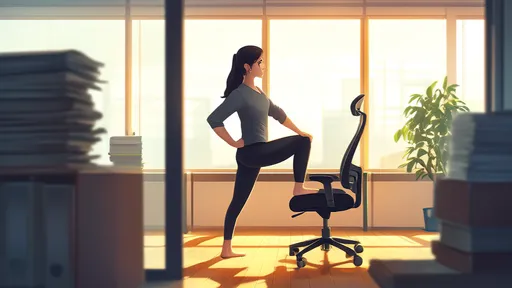
Reversing gluteal amnesia is not about embarking on an intense, high-impact training regimen overnight. It is a process of neuromuscular re-education—teaching your brain to reconnect with and activate these powerful muscles consciously. The journey begins with mobility work. Before asking the glutes to work, we must address the tightness in their opposing forces. Daily hip flexor stretches and lumbar rotations can begin to create the space and freedom needed for the glutes to function. A simple kneeling hip flexor stretch, held for 30-45 seconds on each side, can work wonders in lengthening these chronically shortened muscles.
The next phase involves activation exercises. These are low-resistance, high-focus movements designed to isolate the glutes and wake up the neural pathways without the interference of larger, more dominant muscles. The quintessential activation exercise is the glute bridge. Lying on your back with knees bent, the focus is on driving through the heels to lift the hips toward the ceiling while squeezing the glutes at the top. The goal is to feel the burn in your posterior, not your hamstrings or back. Other brilliant activation drills include clamshells with a resistance band, focused on the gluteus medius for hip stability, and bird-dogs, which engage the entire posterior chain while promoting core stability.
Once activation becomes more natural, these patterns must be integrated into functional movement. This is where strength training comes into play. Compound movements like squats, lunges, and deadlifts are the ultimate test and tool for strong, active glutes. However, form is paramount. The focus must remain on initiating the movement by "sitting back" into the hips and consciously engaging the glutes throughout the entire range of motion. It's not about the weight on the bar; it's about the mind-muscle connection. A bodyweight squat performed with perfect, glute-focused form is infinitely more valuable than a heavily loaded one performed with poor mechanics.
Ultimately, the most critical component of any "glute wake-up call" is breaking the sedentary cycle. No amount of exercise can fully counteract ten hours of continuous sitting. The solution must be woven into the fabric of the workday itself. This means setting a timer to stand up and walk for two minutes every thirty minutes. It means using a standing desk, even if only for an hour or two each day. It means taking the stairs, walking to a colleague's desk instead of emailing, and holding walking meetings. These micro-breaks are not interruptions to productivity; they are investments in the physical machinery that enables it.
Transforming from a state of gluteal amnesia to one of powerful, active engagement is a journey of consistent, mindful effort. It requires a shift from perceiving exercise as a separate activity to understanding movement as an integral part of daily life. By prioritizing mobility, practicing activation, embracing functional strength, and, most importantly, moving frequently throughout the day, office workers can reboot their bodies' natural architecture. The reward is not just the alleviation of pain but the rediscovery of vitality, strength, and resilience that empowers every step, both inside and outside the office walls.
By /Aug 25, 2025
By /Aug 25, 2025
By /Aug 25, 2025
By /Aug 25, 2025

By /Aug 25, 2025

By /Aug 25, 2025

By /Aug 25, 2025
By /Aug 25, 2025
By /Aug 25, 2025
By /Aug 25, 2025
By /Aug 25, 2025

By /Aug 25, 2025
By /Aug 25, 2025

By /Aug 25, 2025
By /Aug 25, 2025
By /Aug 25, 2025
By /Aug 25, 2025

By /Aug 25, 2025
By /Aug 25, 2025
By /Aug 25, 2025
